Why Writing about Bittersweet Moments is So Very Good

graduation

I attended my sister’s college graduation this weekend. Traveling back to my own alma mater, drinking in the springtime air and clusters of brightly blooming flowers, the buzz of excitement and energy, was good for the soul.

But it also made me think about those times in life—like graduation—that are simply bittersweet. The good comes with the not-so-good. Reaching a new point means letting go of what’s come before.

And it made me ponder why writing about bittersweet moments is so good, so deliciously satisfying.

  Read More

Energize Your Writing with this Easy Trick

Jumping in Leaves

If your writing seems a little dull, tap into this easy trick—focus on the verbs. Using direct, precise, and active verbs instantly makes your writing stronger.

These verbs move your story forward, create powerful imagery, and convey a confident tone.

  Read More

Why You Should Write about the Everyday

kitchen table

Some people think writing about everyday occurrences is uninteresting. But I like to believe that the everyday is what connects writers with readers, as human beings who share a common or not-so-common world.

What is it about the everyday—the small details, the routines and rituals—that resonates so deeply?

  Read More

How to Write a Memorable Beginning and Ending

beginning of a book, part one

You know that well-worn, well-loved book that you’ve read many times? Simply turning to the first page and reading the opening line brings you into the story. And when you reach that final page and the very last sentence, the story melts away, leaving you content—or perhaps wanting just a bit more.

An intriguing beginning and a strong ending act as bookends to any good story. So how do you craft memorable first and last lines?

  Read More

Write About What Scares You

haunted house

We all experience fear from time to time. But what about those things that truly terrify us, those situations that may not even ever happen? Our fear may not always be rational, but this deep-rooted emotion is a powerful tension to insert into our writing.

Because fear is not something we enjoy feeling, it is also often uncomfortable to write about—which is what makes the end result fascinating.

Here are some things to keep in mind when writing about fear:

  Read More

How to Find Time to Write

red clock

As much as I’m eager for the arrival of spring—with its longer days and warmer temperatures—the jump forward due to Daylight Saving Time this weekend means we lost an hour of time.

These days, every minute seems precious. With so many commitments, activities, and demands on our time, it’s difficult to carve out a small window for doing what we love. (And sometimes when that time pops up, we may not be in the mood to write—because let’s be honest, writing isn’t always easy!).

How can we find time to write? And how do we make the most of that time?

  Read More

What Poetry Teaches Us about Writing Prose

bookshelf

I took a poetry class to fulfill one of my workshop requirements for my master’s in Writing and Publishing. Although I didn’t have much prior experience with poetry beyond some teenage scribbles, I discovered a new way of playing with language.

And in the process, I also realized writing poetry helped me to write better, stronger prose. Here are four things I learned about poetry that apply to writing prose:

  Read More

Why People Love Stories about First Love

hearts in sand

Valentine’s Day is one of those love-hate holidays, but no matter how you feel about this week’s special day, the theme of love provides endless inspiration for writing.

There are many types of love stories—ones about first love, second-chance love, forbidden love, unrequited love. But what is it about first love that makes such an impact on us, both in our real-life experiences and in written form?

  Read More

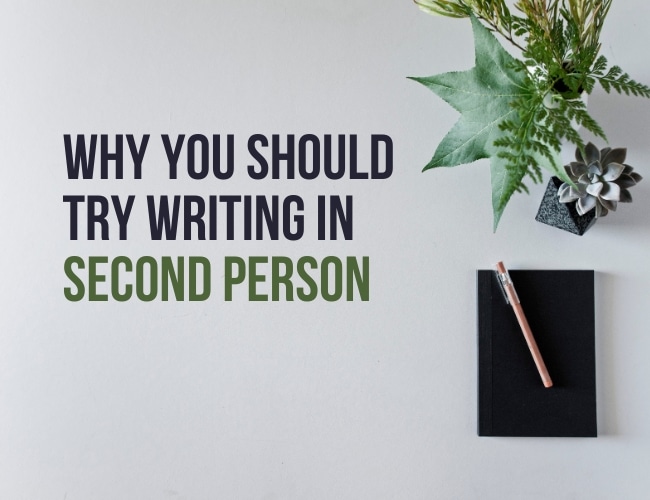
Why You Should Try Writing in Second Person

Photo by Rick Seidel

First person and third person—you’ve been there, done that. But what about writing in second person? It may seem strange, unconventional, or confining, but playing with point of view is one way to transform a story.

Point of view affects a story in that it allows readers to gain a very specific perspective. The second person is no different. Here are three reasons why you should try writing in second person:

  Read More

Here’s Your Chance to Rewrite the Past

Revision

Have you ever had one of those encounters in which someone says something and you are rendered speechless? After the dust settles and you’ve parted ways, you come up with at least half a dozen appropriate (or not so appropriate) responses.

Hindsight is 20/20, they say. But in writing, we all have a chance to relive conversations, confrontations, interactions, and situations—and change the outcome. Through the magic of fiction, we have the opportunity to do what we wish we had done.

  Read More