
The world of artificial Intelligence is rapidly evolving, and new writing tools are popping up all the time, each claiming to make the writing, editing, and publishing process easier. As you might expect, some AI tools live up to the hype . . . and others don’t.
Today, we’re bringing together our honest reviews of the AI tools we’ve tested so far, including AI-powered writing tools, developmental editing support, social media posts, and marketing copy, so you can decide what makes sense for you and your book.
If you'd like to check out our very favorite pieces of book writing software, make sure to read our article here.
Book Writing Software (2026): Top 10 for Writers.
And if you'd like to learn more about the other popular writing software we've tested, check out our directory here: Our Book Writing Software Reviews: Find the Right Tools for Your Writing Process.
Now, keep reading on for our honest thoughts on some of the most popular AI tools out there.
Just a heads up: some of the links in this article and in our reviews are affiliate links. This of course won't affect the price you pay or any of our opinions of the tools.
Our AI Writing Software Reviews: Contents
1. Twig (Virtual Developmental Edit)
Finishing your draft is a huge achievement, but it’s only the start of your editing journey. Identifying what’s not working in your manuscript, where the problems are, and how to fix them can be overwhelming, especially when a professional developmental edit can cost $1,500+ and take weeks or even months.
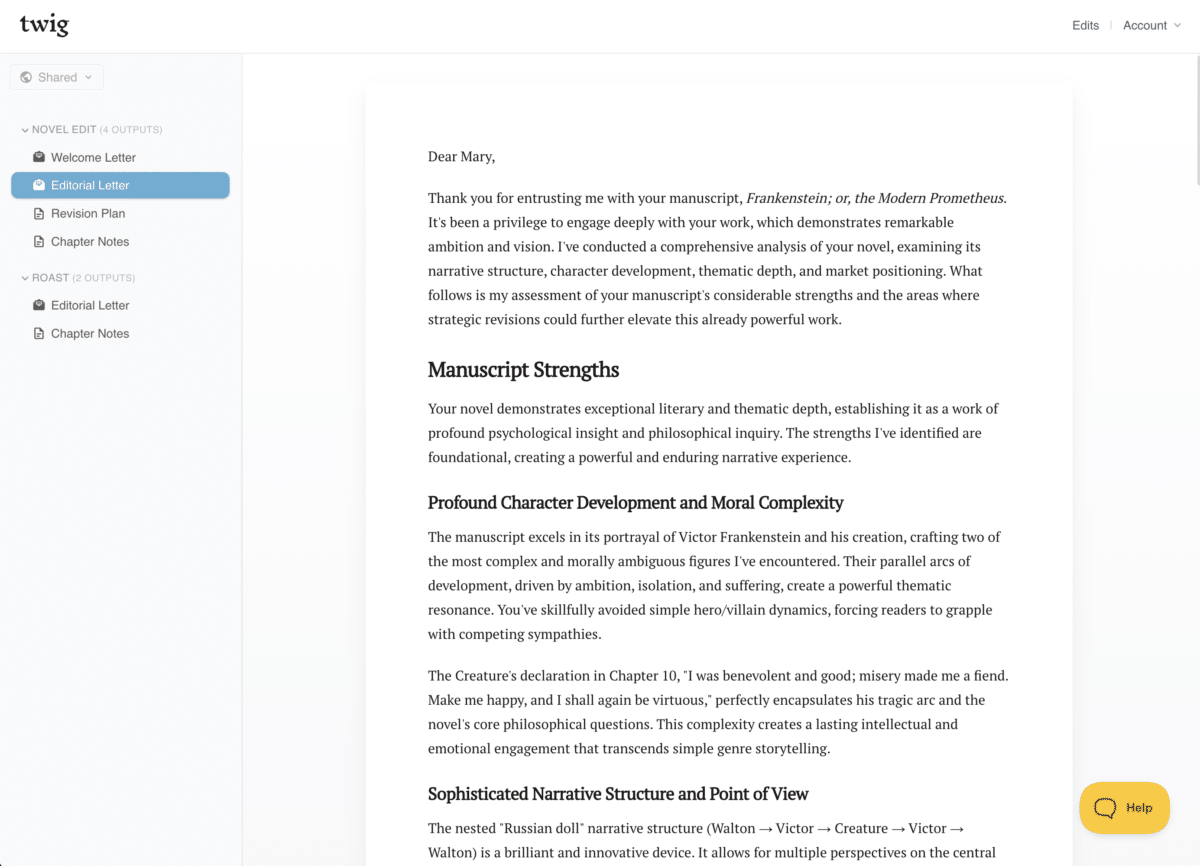
Twig makes that first step easier by delivering a comprehensive, professional-level developmental edit in 30 minutes or less and at a fraction of the price. Using a genre-specific analysis framework, Twig shows you exactly what’s working, what isn’t, and how to improve your fiction, memoir, or nonfiction book.
If you want actionable feedback fast on your manuscript’s strengths and weaknesses (and get more value from your human developmental editor later), Twig is an excellent option.
Pros of Twig:
- Receive actionable, detailed, genre-specific feedback in thirty minutes or less.
- Twig's genre-specific analysis framework makes it perfect for fiction, memoir, and nonfiction books.
- The report costs approximately one-tenth of traditional developmental editing, making it a more affordable option for writers.
- Twig will never use your manuscript to train AI models.
- If you run into any trouble or have questions, Twig offers excellent customer support.
Cons of Twig:
- While generally accurate, Twig occasionally makes minor mistakes, such as misidentifying characters.
- It has limited nuance for experimental writing or where you are intentionally breaking genre conventions.
- You'll need to use your own judgment when deciding which pieces of feedback to accept and which to ignore.
- It's more expensive than other general AI tools, such as ChatGPT (however, its analysis is far more specialized).
Check out our full review here.
2. PlotDrive (AI Writing Tool)
The writing process can often feel chaotic. From research notes to planning to different drafts and comments to ourselves, it can be hard to keep everything we need for our books in order.
That’s where PlotDrive steps in. PlotDrives helps you stay organized by keeping everything together in one place.
It’s easy to set up a new project and then create as many new documents as you want for things like your outline, character sketches, and chapter notes.
There's also an AI Co-Writer feature that you can use for brainstorming, outlining, referencing (what color were my protagonist’s eyes again?) and even writing.
When you’re finished, you can then export your manuscript (or single chapters) into .docx, PDF, or Markdown.
If you like to keep everything in one place, PlotDrive might be a great choice for you.

Pros of PlotDrive
- It keeps everything neat, tidy, and easy to manage.
- You can switch between LLMs.
- It’s easy to set up and keep documents organized with a simple drag and drop feature.
- PlotDrive has a clean, pleasant interface.
Cons of PlotDrive
- PlotDrive works on a credit system. While they’ve recently adjusted their subscription models, you still only have a limited amount of credits each month to work with. Once they’re gone, you either have to buy more or wait until your next month starts.
- There is occasionally a lag when switching models.
- There is no offline mode.
Check out our full review here.
3. Sudowrite (AI Writing Tool)
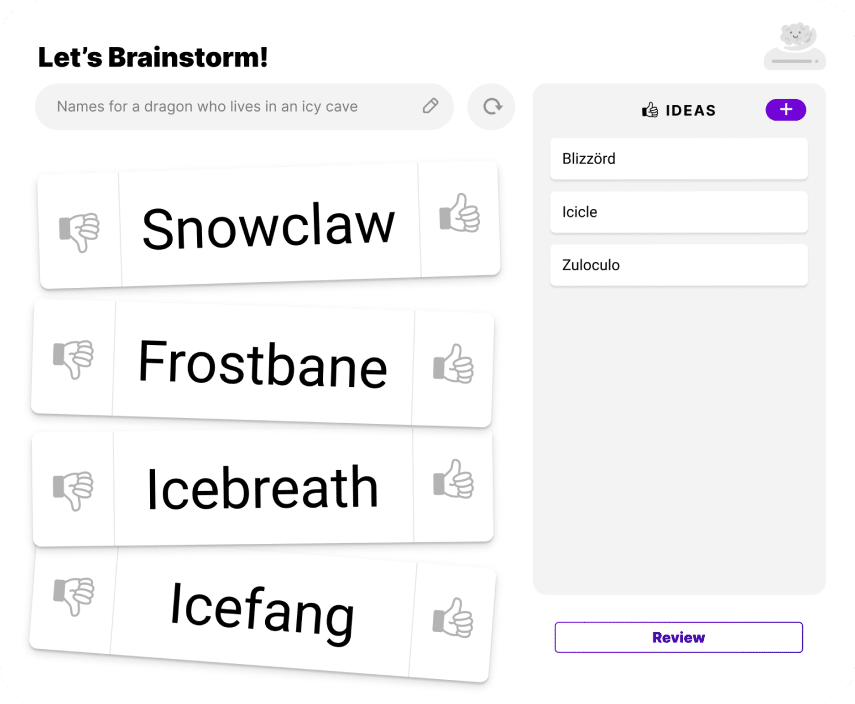
Sudowrite is an AI writing tool that helps authors brainstorm, draft, and polish their books. Its features make it easy to develop a story from start to finish, and it goes far beyond just writing.
One of Sudowrite's best features is the Series Folder, which lets you store and reference things like characters, world-building details, and past events across multiple books. This is incredibly helpful for ensuring continuity, especially for writers juggling a series or those who just want things like character descriptions to stay consistent while drafting.
If you want a little extra help brainstorming, organizing, or polishing your manuscript, Sudowrite could be a great option.
Pros of Sudowrite:
- You can try Sudowrite for free, with paid plans starting at just $10/month.
- There are so many features you can use, and you can choose how collaborative you want the AI to be.
- It's intuitive and easy to use, especially for new writers.
Cons of Sudowrite:
- It's not as open-ended or customizable as some AI writing tools, such as PlotDrive.
- Having so many features and options can make it feel intimidating at first (although it does become intuitive and accessible once you get used to it).
- Its suggestions vary in helpfulness.
Check out our full review here.
4. ScribeShadow (AI Transcription Tool)
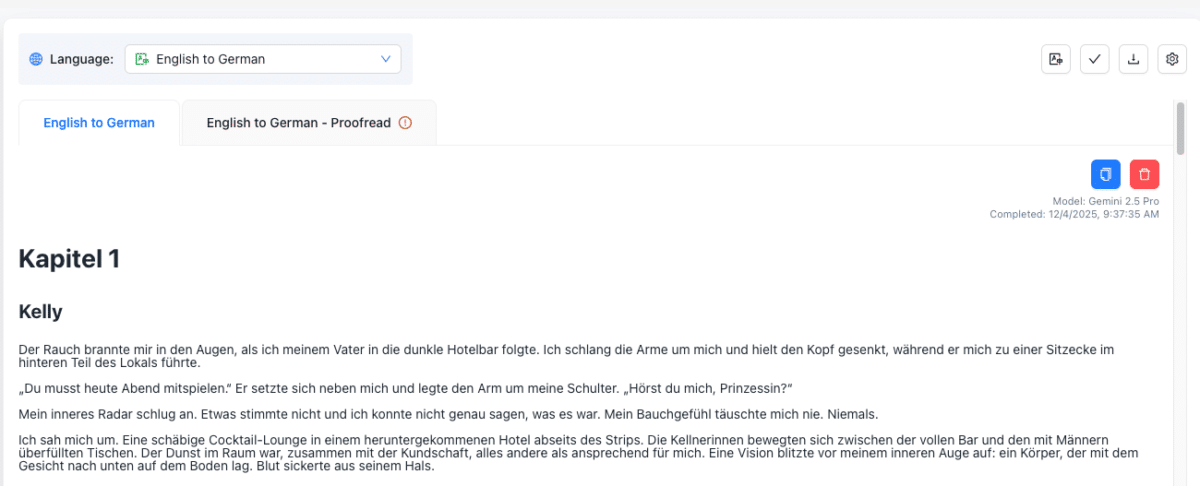
If you’ve ever considered translating your book into other languages but have been put off by the cost, ScribeShadow might be the best solution for you.
Like most of these AI programs, ScribeShadow isn’t trying to replace human translators. What it tries to do instead is make their job easier by using AI to translate your manuscript first so that a human translator can then come in and fine-tune it.
It’s simple, fast, and easy to use. And most importantly, it's fairly accurate. When we tested it, we found it was about 70% accurate, mostly struggling with slang and tone.
As long as you’re using a human translator as well, this service can definitely help make translating your books more affordable.
Pros of ScribeShadow:
- ScribeShadow is fast and easy to use.
- Its plans start at $19/month, which includes 15,000 monthly credits (each translated word costs one credit).
- It's genuinely helpful for indie authors who want to expand their readership.
Cons of ScribeShadow:
- It struggles with things like context, tone, and slang, so you’ll need a human translator to make sure it’s accurate.
Check out our full review here.
(Use our discount code to get 20% off ScribeShadow Credits. And, if you like, you can also use Jamie Bigg's referral code (the awesome author of our review) when signing up: JBWRITESAZ)
5. ProWritingAid Manuscript Analysis and Virtual Beta Reader (Virtual Developmental Reports)
ProWritingAid has been a favorite spell checker and style guide of ours for a long time. When they branched out into virtual manuscript and beta reader reports, we couldn’t wait to give them a try.
Using AI, the Manuscript Analysis delivers the same kind of actionable feedback on what is and isn’t working in your book that a developmental editor would. It looks at the big-picture issues like pacing, characterization, and plot holes, and gives you suggestions and clarity on how to make your book even better.
Similarly, the Virtual Beta Reader report dives into how your book works on an emotional level, how it connects with readers, and what makes them want to keep reading (or not).
These reports are not designed to replace human editors, but can help you prepare for them by giving you a solid starting place with your revisions.

Pros of ProWritingAid's Virtual Reports:
- The feedback is clear, comprehensive, and (most importantly) actionable.
- The reports highlight both the positives and the negatives, which is so important for writers to know.
- ProWritingAid uses a credit system for the reports, making it an affordable option in your writing and editing process.
Cons of ProWritingAid's Virtual Reports
- Being AI, the feedback wasn’t always accurate. However, the mistakes were fairly minor and didn't detract from the overall quality of the report.
- The reports aren't as suitable for memoir and nonfiction books.
- The reports are more expensive than AI tools like ChatGPT, but like Twig, are far more specialized and professional.
Check out the full review here.
6. ManuscriptReport (Book Marketing Tool)
One of the biggest lessons I’ve learned in my publishing journey is that writing a book and writing its sales and ad copy are two very different things. Thankfully, ManuscriptReport offers an easy (and affordable) way to help authors set their books up for success and sell more copies.
ManuscriptReport has several packages to choose from, ranging from full marketing reports to social media posts and blog posts, all tailored specifically to your book. Just upload a PDF of your manuscript, and they take it from there.
The best part? Each report breaks down what every section is for, how to use it, and even what to look out for after you've sent it out or posted it. You can use the sales copy exactly as they provide it, or tweak it to match your voice and vision. It feels like ManuscriptReport isn’t just setting your book up for success—it’s setting you up for success as an author.
Great books deserve great marketing, so if you’re looking for an AI marketing tool that will support your whole launch (and beyond), ManuscriptReport is definitely worth a look.
Pros of ManuscriptReport:
- The packages are very affordable, which makes them a great option for new writers or authors on a budget.
- ManuscriptReport doesn’t just hand you sales copy. The reports also come with instructions and tips on how to use them, so you can launch or refresh your marketing feeling prepared and confident.
- The reports are clear, actionable, and easy to tailor to your voice and brand.
Cons of ManuscriptReport:
- The pictures in the social media report aren't quite as helpful as the rest of the content.
Check out the full review here.
Which AI Writing Tool is Right for You?
Whether you’re looking for help to brainstorm, write, edit, or market your book, we hope these AI writing tool reviews help you find the right AI software for you.
What are your favorite AI writing tools? Let us know in the comments!
PRACTICE
AI writing tools can make the writing process easier, but none can match our passion, dedication, or individual writing styles. Today, let's practice those writing styles!
Set the timer and free write for fifteen minutes. If you need help coming up with an idea, check out our top 150 short story prompts.
When you're finished, share your practice in The Write Practice Pro workshops. Don't forget to leave feedback for at least three other writers!
Not a member yet? Join us here.
Happy writing!

Elizabeth Nettleton is an author and editor currently based in Oxfordshire, England. An avid reader and writer since childhood, she was once so engrossed in her book that she ran into a lamppost.
There is nothing Elizabeth loves more than magic and getting lost in other worlds (except for her family, friends, and pets, of course!), so she primarily writes fantasy, sci-fi, and horror. When she's not reading or writing, you can find her playing with her kids, daydreaming, or trying not to die in a video game.
You can learn more about Elizabeth's projects on her website, or say hello to her on X here.
0 Comments