by Guest Blogger |
We all face a point in our writing careers when we feel the heavy weight of writer’s block crushing our muse. We all have moments where we want to write but can’t because nothing comes to mind. Well, nothing that we consider worthwhile that is.
by Marianne Richmond |
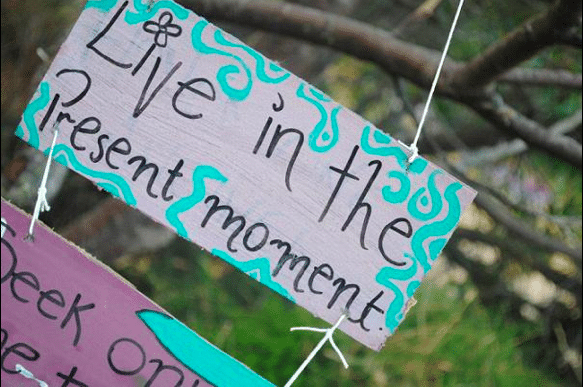
During hectic times, I like to jump-start my creative writing practice with the Present Moment writing prompt to pull me back to today, to notice what is rich and savory about this. Very. Minute.
by Sophie Novak |
Flash fiction has been the most widely growing fiction phenomenon in the 21st century, with its roots and great popularization in Canada and the US. The reason for the popularization of shorts is straightforward enough: people want fast bites in these dynamic and time-restrictive times.
What’s more important to pinpoint, though, is the superior nature of writing flash fiction. It’s condensed meaning in the shortest possible prose form. Microfiction is about lyrical writing. Just like in poetry, every word should have appropriate weight; bring that ‘magical’ element to the story.
![Public Speaking [writing prompt]](https://thewritepractice.com/wp-content/uploads/2013/10/public-speaking.jpg)
by Joe Bunting |
PRACTICE
Your main character must give a public presentation. Is he nervous? What is she going to say? How does he imagine the audience will act? How does the speech go?
Write about public speaking for fifteen minutes. When you’re finished, post your practice in the comments section. And if you post, be sure to give feedback on a few practices by your fellow writers.
![Sleepless [writing prompt]](https://thewritepractice.com/wp-content/uploads/2013/09/sleepless.jpg)
by Joe Bunting |
PRACTICE
Your characters haven’t gotten any sleep. Write about it.
Write about being sleepless for fifteen minutes. When your time is up, post your practice in the comments section. And if you post, be sure to comment on a few practices by other writers.
by Sophie Novak |
I recently finished reading the Nobel Prize winner José Saramago’s Death with Interruptions. It fascinated me in countless ways: the style uniqueness, easy flow, ideas represented, underlying themes, references. What’s so special about it? Well, it’s an allegorical story about what could happen if people suddenly stopped dying. Straight and simple, and yet complicated.
An allegory is a literary genre concerned about principals and ideas represented abstractly. So how do you go about it? Consider three basic steps towards writing one.