by Guest Blogger |
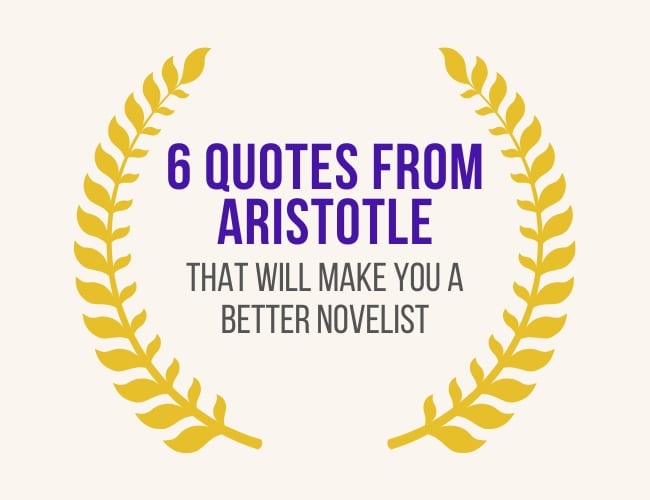
When I came across these quotes from Aristotle’s Poetics, I realized that they held more than inspiration–they held real wisdom for novelists. Can these 6 quotes by Aristotle make you a better novelist? Read on to find out.
by Joe Bunting |
Six-word stories are a great way to practice your writing without actually having to write much.They can also be used to warm up before working on a novel or short story.
While you’re not going to be able to tell an entire life story in six words, you just might be able to catch a movement of conflict or a significant moment in a character’s life. Plus it’s fun. Let’s look at how to write a really short story.
by J. D. Edwin and Joe Bunting |
Do you love writing but find it hard to be productive when working on your book? Have you tried the Write or Die app to help you stay focused?
Write or Die is a writing app that uses various tools to keep you focused and productive during timed writing sessions.
Not everyone loves restrictions when working on a book, but those who do often find the accountability factor a game changer to actually reaching their word count.
If this is you, but you haven’t found the perfect tool to help with your procrastination pitfalls, Write or Die might be the answer.
It was for me, which I’ll explain more in this post.
by Abigail Perry and Ruthanne Reid |
Writers write to get a reaction out of their readers. No matter the genre, you want your reader to feel something when they read your writing.
For horror writers, that feeling is fear. But it’s also so much more than that.
Great horror stories take the everyday creepy and turn it into something even more creepy (and often become a condemnation of injustices in society). And then, the great thing is, horror stories teach you that those creepy things can be beaten. That’s what keeps bringing the readers back.
And that’s why horror writers keep churning out the fear.
Maybe you love writing scary stories. Maybe you don’t, but this is something you’d like to take a whack at, just for practice (we’re fans about that around here!).
Just like reading outside your genre is valuable to mastering the writing craft, so is writing a scary story.
This story doesn’t have to be long, it could be a short story. Try for something you can write in one sitting, like 1,500 words.
To get you started, use one of the Halloween writing prompts suggested in this article. Then let loose, and have fun!
by Joe Bunting |
Interviews are far more than a tool for a hiring process. For writers, interviews produce ideas, voice, and more. But in an interview, you want to have a conversation, not an interrogation. A good interviewer makes their interviewee comfortable.
by J. D. Edwin |
Are you trying to write faster? Writing a scene outline might be exactly what you need. But what is a scene outline, and how you can create one that help direct your story while giving you creative freedom?
A scene outline can give your story plan focus and prevent burnout or confusion when actually writing your story.
In this article, you’ll learn how to create a scene list that gives your big story idea focus, which will help you not only write faster, but give you a higher chance of actually finishing your book—and having fun while you write it!