by Joe Bunting |
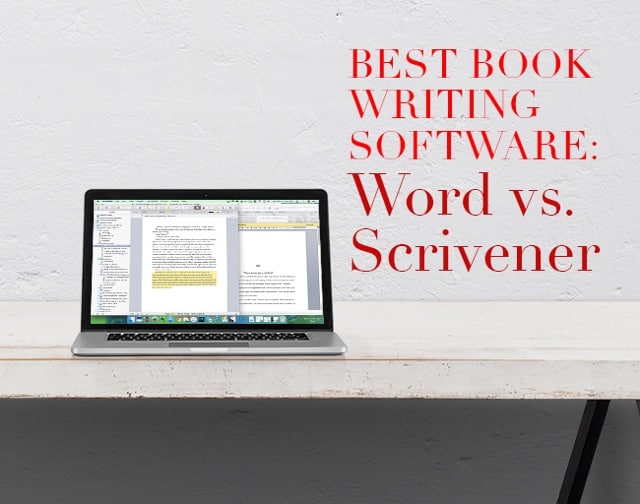
When you’re writing a book, you might come to this point where exasperation turns to desperation and you think: “There has to be a better way. There has to be a better piece of book writing software than Microsoft Word.”
Microsoft Word is the default word processor, but that doesn’t mean it’s the only option. And especially when you’re writing something as complicated as book, you might want a piece of writing software geared specifically toward writing a book.
In this post, we’re going to look closely the most popular alternative to Microsoft Word: Scrivener, and talk about where each word processor shines and where each falls short.

by Elizabeth Nettleton |
As writers, we’re always looking out for software that will make our jobs a little easier and leave us more time to do what we really want to be doing—writing! That’s why here at The Write Practice we love trying out different writing software to test their efficiency when it comes to planning, writing, editing, and formatting our books.
by Joe Bunting |
You’ve fought through the first draft. You’ve worked with your editor to complete all the passes needed to make your book the best it can be. It’s ready to become a book. Now what? Read on to see if you could benefit from Atticus, a new book writing software.
by Alice Sudlow |
ProWritingAid is a grammar checker and style editor meant to help you improve your writing and become a better writer. How does it work? And would it be a useful tool for you? I tested it to find out, and I’ll break it all down for you in this ProWritingAid review.
by Jamie Biggs |
There’s a growing divide in the writing world right now. On one side, you have authors excited about experimenting with AI. On the other, you have traditional writers who want nothing to do with it. The conversations can get heated fast, and often it feels like there’s no middle ground.
I wanted to know if there was room for compromise. Could AI help with speed while I protected the heart of the story? Could it serve as a tool instead of a replacement?
by Elizabeth Nettleton |
ProWritingAid has always been a great tool for catching my spelling and grammar mistakes, but I was curious: could it handle bigger-picture problems like plot holes and character inconsistencies? And if so, how accurate would it be? I tested both features on the first draft of my novel, and here are my honest thoughts.