by Sarah Gribble |
How do you keep writing through life’s big changes? New houses, new jobs, new babies, even new puppies can throw a wrench into your writing life. It’s so easy to get distracted, run out of time, and lose your writing motivation.
Change is inevitable. It messes with our lives, turns our world upside down. Even through these changes, writers have to write. It’s easy to say you’re distracted, that you can’t write right now. You’ll pick it back up when things have settled down.
But the longer you go without writing, the less likely you are to pick it back up. So what to do?

by Joe Bunting |
A high school pottery teacher split his class in half. To one half he told them they only had to produce one perfect pot by the end of the semester and they would get an A. He turned to the other class. They had to produced fifty pounds of pots by the end of the semester. It didn’t matter whether the pots they made were good or not. They had to be pots and there had to be fifty pounds of them.
By the end of the year, who do you think produced the best pot?
It’s really a question of what makes better work, quality or quantity?

by Sue Weems |
Daily writing produces a kind of experience and writing practice that is irreplaceable. But what if I’m writing every day, but my writing is still falling short of where I want it to be? (I’m asking for a friend.)
Do I push away from my writing desk to get better? Do I need a university course? Should I pay an editor? Sacrifice my first born child or a kidney?
Write more! I tell myself. But writing more is not enough. (Insert exasperated sigh.) Isn’t it hard enough just to write? What else do I have to do?
Practice differently. This is the secret to becoming the writer you want to be as quickly as possible.
by The Magic Violinist |
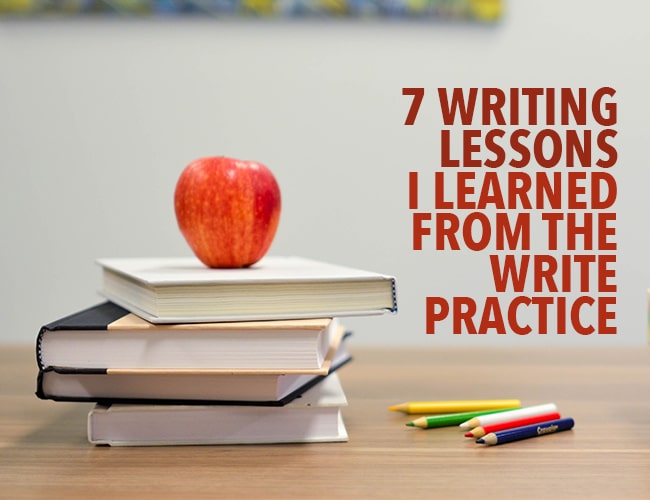
It’s with a bittersweet tone that I write this post, because it will be the last one I write for The Write Practice for a long time as I get ready for my first year of college. I’ll call this a “soft goodbye” since this is technically my last post, but it definitely will not be the last time I “hang around” The Write Practice. I’ve learned so much in the seven years I’ve contributed to this fabulous website and I still have so much to learn. I thought I’d share seven of those writing lessons with you now.
by Joe Bunting |
“One: Work on one thing at a time until finished,” Henry Miller commanded himself. “Two: Start no more new books, add no more new material to ‘Black Spring.’ Six: Cement a little every day, rather than add new fertilizers. Ten: Forget the books you want to write. Think only of the book you are writing.”
I was never very good at finishing. I used to get a good start on an idea for a novel or short story. I would get five or ten or twenty-thousand words into it. And then I would get another new idea for a more interesting project and take off doing that. I have five or six unfinished novels on my computer hard drive. I call them my skeletons, and I ask, occasionally, if they will ever be covered in flesh.