
My motivation for writing my first book (The Secret to Better Schools: A New Mindset for Engaging the Community) was to understand my unique approach to helping schools and nonprofits. You could say that my enthusiasm and curiosity had been leading me, and my mind needed to catch up.
Today's article is written by Deborah Lukovich, PhD. Deborah is a depth psychology coach, author of When Sex Meets God: A Midlife Unraveling, and one of our 1 Year to Publish alum. Welcome, Deborah!
Getting to Know Myself Through Writing (Before it all Fell Apart)
In my second book (The Secret to Fundraising: It’s Not About Asking for Money), I became aware of the core beliefs beneath the surface of my work. I was getting to know myself through writing.
Then my life fell apart: my marriage, my quarter million-dollar business, and my middle-school aged son said he didn’t want to live. A dream about my teeth falling out of my mouth pushed me to surrender, so I let go of my business-plan approach to life in favor of answering an irrational and expensive calling to pursue an MA/PhD in depth psychology.
I knew it would save my soul, and sure enough, five years later, after difficult choices and answering another irrational call to research women’s experience of reconciling sexuality and spirituality, I submitted my dissertation. I had learned to be a scholarly writer.
Surrendering to Not Knowing
Over the next few days, a mysterious force took me over, and I unexpectedly typed fifty thousand words. It was the beginning of my memoir, the guts of the midlife experience that was so odd and ironic, I had to study it. “I’m in that movie,” I would tell myself, and soon I imagined my future memoir becoming a Netflix series. It was a defense mechanism of sorts to get me through those tough times.
Then I stopped. And COVID came. I answered more irrational callings, like leaving a six-figure job without having another one, selling my house, and packing up and leaving my hometown. I settled into an apartment in a Florida beach town where my sister lived. Now divorced and kids off to college, I was free, yet I was drowning in anxiety from having no idea how I would earn a living.
It was odd; the more I surrendered to not knowing what to do, the more clues that showed up, like the day an email from The Write Practice caught my attention. I took the ten-week course, which forced me to turn an odd fantasy into my first short story. Then I felt compelled to write my second short story about a numinous yoga class experience.
I was hooked. I took the 100-day course, where I vulnerably placed the guts of my memoir into the hands of others. One fellow writer asked, “Why did you stay with your husband for so long?” Good question. It’s complicated. Subsequent questions helped me shape my story. It felt so collaborative. Now, I can’t imagine ever writing a book without at least fifty people reading various versions of it.
The Messy Relationship Between Soul and Mind in Writing
I couldn’t get enough of The Write Practice. It was another type of PhD experience. I signed up for the One Year to Publish program, and I kept working on my memoir, but I knew it wasn’t ready. At the same time, I wrestled with Joe Bunting’s warning to not let perfection get in my way (I was a recovering perfectionist after all).
The tension burned inside me. How did I know my soul was right about it not being ready?
By the end of that program, I wrote and published an entirely different book, in ninety days (Your Soul is Talking: Are You Listening?). It was my first attempt to teach people the language of their unconscious. Three months later, I launched the Dose of Depth podcast, and a new depth psychology coaching business took root. What a relief!
The Heroine's Journey
A few months ago, after being away for five years, I surprisingly wanted to move back home. You might not know this, but circling back is the heroine’s part of the hero’s journey. Once we face our demons and learn the insights and gain the wisdom needed to pursue a new sense of purpose, we must return to relationships, to the community to share the “booty or treasure,” our wisdom. Distance and separation are required for consciousness expansion on personal and collective levels.
I had to leave, and I had to come back, and it is my soul that has orchestrated the timing of finishing and releasing this memoir.
Something amazing happened during those five years away from my hometown; someday, I’ll have to write about that, too. I learned to relax into creative expression, and I learned how to write a story. I’m ready! I think Joe said something about the goal being to write the best story you’re capable of writing at the time.
This is it, and I’m ready to share my personal midlife journey, first as a memoir titled, When Sex Meets God: A Midlife Unraveling. My soul says it’s going to become an online production, too.
It's all About the Process
A memoir is different than nonfiction. To say, “It’s personal,” is an understatement. First comes the raw honesty and vulnerability, but then comes the craft. I’ve gone through more than ten drafts, and I discovered that I could only take on one aspect of writing at a time, and I cringe at what had to be removed along the way.
My first fifty-thousand words had zero dialogue. I just vomited stuff onto the page. One draft was devoted to adding dialogue and the second to removing dialogue that wasn’t needed. Another draft was devoted to making sure each chapter reflected the six story elements, and the next draft ensured that each scene within each chapter contained the six elements.
Rather than become exasperated, learning and honing my skills felt exhilarating, and I think this is the key. It’s about the process as much as the final product.
What I've Learned
My advice:
- Absorb and learn everything you can, but don’t necessarily adopt someone else’s approach. Take what resonates and is helpful and create your own framework and be open to changing it up.
- I prefer the term diligence over discipline. While you cannot “force” creative intelligence to flow through you, it is possible to develop a practice that is conducive to partnering with the mysterious force to create what only we can create in partnership with what transcends us. Developing rituals that honor creative expression, similar to that of working out, going to yoga class, or meditating, is what diligence is about.
- Joe often asks, “Are you a plotter or pantser?” The truth is that you don’t need to choose, and not knowing the answer shouldn’t be an obstacle to getting started. For me, writing nonfiction was easier, and a linear process made more sense. On the other hand, my memoir started with vomiting out what was fun to write, what made me laugh, smirk, and reexperience arousal. Most of my depth psychology coaching clients are walking future memoirs; they just don’t know it yet. I tell them to journal!
- Be radically open to feedback, and if you’re triggered, get to the root of the disempowering emotional reaction. It’s not about that feedback; it’s about how someone in your childhood said something that traumatized you back then, and it imprinted in your body. The best kind of feedback for me was in the form of questions. Also, don’t be afraid to provide guidelines for what useful feedback looks like for you.
- Get yourself on a launch team before you launch your own book; I’ve been on two. You can learn almost as much from giving feedback as from receiving it. Be generous and you will receive, maybe not from a specific person, but the universe keeps the score.
- Be patient and curious about your unique approach. What I learned about myself was that I can only apply one principle at a time; I learn in layers. For one draft, I focused on dialogue; for another, storytelling elements; for another, the Story Grid; for another, the 14-Sign Posts, etc.
- Ask for help, build an email list, and keep people updated on what you’re up to. Writing blog posts is a great way to keep people updated and to hone your skills. Seriously, people are intrigued with writers. In many cases, they wish they were you, and depriving them of the opportunity to live through you vicariously just isn’t fair. When I was looking for an affordable proofreader, I just asked on Bluesky, and at least two people offered. Same for beta readers, advance readers, and reviewers. Many people provided their feedback for free because they enjoyed being of service. I always ask them to let me know when I can return the favor.
The Bottom Line
The bottom line is that writing is the process of coming into a deeper relationship with yourself, whether you know it or not. In fact, there is a hidden unconscious agenda behind your desire to write, and science backs that up. Don’t worry about it; just be curious about what’s beneath the surface of your conscious awareness. Your curiosity is a clue that you’re open to your soul’s guidance.
Have you ever had to let go of overthinking and surrender to the writing or creation process? What was that experience like? Let us know in the comments!
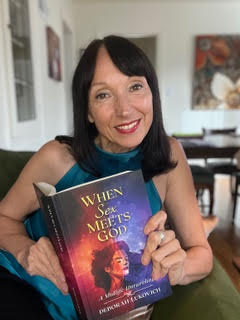
Deborah Lukovich, PhD is a depth psychology coach and author of Your Soul is Talking. Are You Listening? Through her Dose of Depth podcast, writing, and coaching, she empowers others to explore the unconscious forces shaping their lives. Her story is deeply personal, but the journey she shares is universal. Learn more at www.deborahlukovich.com.
PRACTICE
Today, I want you to quieten your inner critic and any mental clutter you have. I also want you to ignore any of the decision fatigue that often comes with artistic pursuits.
Instead, free write for fifteen minutes (whether that's a piece of creative writing, your personal story, or even just journaling). Need a story idea? Check out our top short story ideas here.
Then, when you're finished, post your practice in the Pro Practice Workshop. Not a member yet? Join us here.
Don't think too much about it, and try to silence your internal editor (at least for now). Just get your words down and enjoy the creative process.
Happy writing!

This article is by a guest blogger. Would you like to write for The Write Practice? Check out our guest post guidelines.
Thank you for sharing my experience in this post. There’s an intense vibration of circling back happening in my life right now. The email from The Write Practice that showed up out of nowhere was one of many breadcrumbs that led me through years of uncertainty. I’m grateful to circle back and share what I’ve learned about writing and myself through writing over the past five years. I hope you all enjoy my post. Deborah
Thank you so much for sharing your journey with us! We really appreciate it, and wish you all the best with your writing and your new book.