by Joe Bunting |
In allegiance to Stephen King’s writerly maxim, “The only requirement is the ability to remember every scar,” I’m considering writing a new series of stories about my father’s five year struggle with Chronic Fatigue Syndrom.
I was ten when my father had to quit work go on disability. His body was hurting all the time and he couldn’t think he was so tired. Ten is an age you need a father, but for five years he was largely absent, both physically and mentally. My mom was preoccupied and stressed bearing our family’s financial burdens. I went through the first, confusing years as a teenager all but alone.
But the question is: should I write the stories from this period of my life as nonfiction or channel them into my fiction?
by Ruthanne Reid |
Are you frustrated with your writing? Tired of writing words you know aren’t as good as you want them to be? Frustrated writer, I know why.
A weird thing happens when we finally sit down to write The Book: we expect it to come out as magnificently as we think it should. We see or feel what it should be, and hey—we’ve read and written stuff all our lives, right? It should just come out!
But it doesn’t.
This is normal.
by Pamela Fernuik |
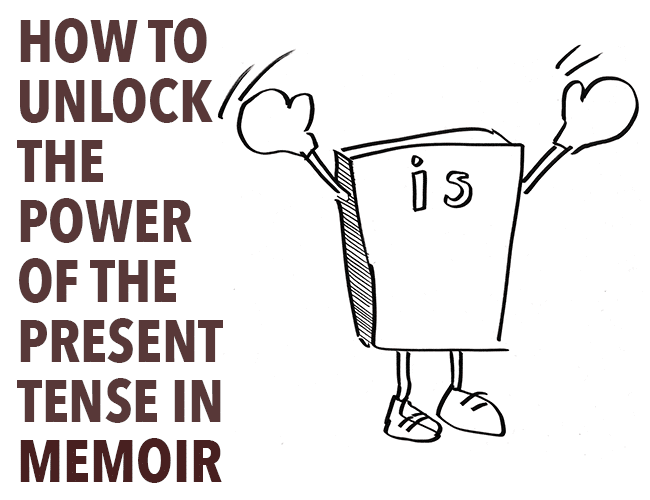
Memoir is about something that happened in the past. You can write the story in the past tense. Or you can write the story in the present tense, as though it is happening now.
There is power in the present tense. Have you considered using it as you write about the past?
by Joe Bunting |
The stereotypical writer used to be a silent, brooding genius who kept to himself and rarely ventured into the outside world, except to do “research” on how the subjects of his stories lived. People imagined an entire profession of Emily Dickinsons, pale and contemplative.
However, for nearly every famous writer—from Ernest Hemingway to Virginia Woolf, J.R.R. Tolkien to Mary Shelley—this stereotype couldn’t be further from the truth.
And the truth is that nearly every great writer had a Cartel.
by Pamela Fernuik |
In grade school, your teacher had Show and Tell. You brought your stuffed Teddy Bear to class to show your class the bear, and you told them how your Teddy Bear came alive at night and fought the monsters under your bed.
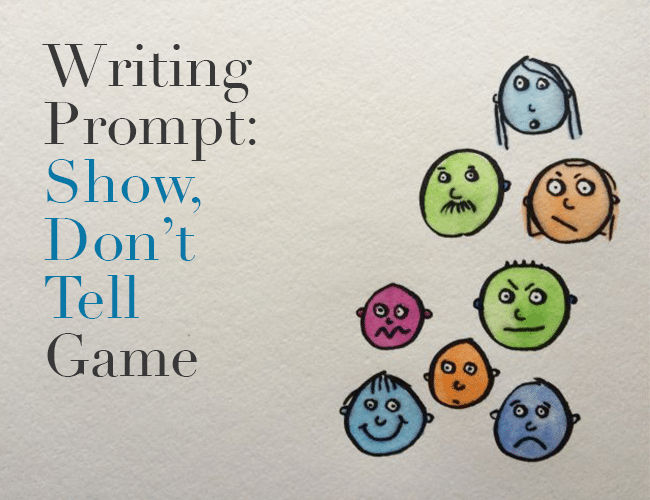
If you wrote a story about the Teddy Bear fighting the monsters under your bed, you could say, “I was scared,” or you could show your fear. Today, we will play a Show, Don’t Tell Game to practice showing and not telling.

by Sue Weems |
The first time I wrote a novel, I didn’t think about genre until the first draft was done, and I began trying to untangle my mess in revision. After two painful years (mostly comprised of avoidance, procrastination, and general despair), I hired a developmental editor who began our first phone call by asking, “What kind of book is this?” and “Who is your ideal reader?”
“It’s for everyone,” I said. I could hear the rise and fall of my breathing in the silence.
“No, it isn’t,” she said in a kind, but firm voice. Within minutes, I realized I had skipped a clarifying question that would guide every step of the book process from the plot and characters to cover design and marketing.