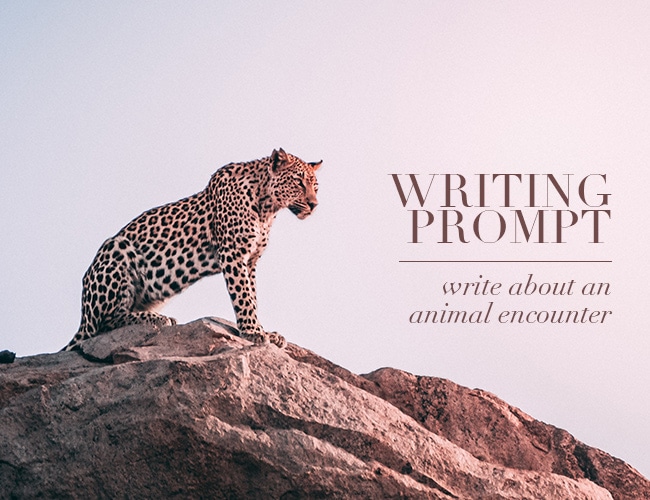
Adding an animal to your story can reveal a lot about the humans who inhabit your world. Whether a beloved pet or a rogue turkey, adding an animal encounter to a scene is surprisingly humanizing.

At The Write Practice, we publish a new article each day designed to help writers tackle one part of their writing journey, from generating ideas to grammar to writing and publishing your first book. Each article has a short practice exercise at the end to help you immediately put your learning to use.
Check out the latest articles below or find ones that match your interest in the sidebar.
And make sure to subscribe to get a weekly digest of our latest posts, along with our free guide, 10 Steps to Become a Writer.
Adding an animal to your story can reveal a lot about the humans who inhabit your world. Whether a beloved pet or a rogue turkey, adding an animal encounter to a scene is surprisingly humanizing.

Want to write good dialogue? Then you’ve got to break the rules.
When you and I talk, we sometimes break the rules of grammar. (I know, it’s a shock, but it’s true.) To write good dialogue, it’s not so much that we are breaking the rules, per se, it’s just that there are rules for dialogue that trump grammatical dogma.
You work hard to write your best story—and if you’re honest, you’re pretty sure it’s amazing. You share it with other writers to get their feedback, and they agree. You work up your courage and hit the “Submit” button, sending it off to a mysterious panel of writing contest judges.
And then . . . you wait. What will the judges think? Will they agree your story deserves to win it all? Did you write the kind of story that will catch the judges’ eye? What kind of story is that, anyway?
I’m going to take you behind the scenes and reveal exactly what judges are looking for when they choose the winners of writing contests.
I have a confession to make: As much as I love writing fiction, I have an almost directly proportional hatred of marketing said writing. I simply have no idea what to do. Or say. Or post . . . You get the picture. So when I learned that ManuscriptReport seeks to make authors’ marketing life a little easier, I was really keen to check it out. In today’s ManuscriptReport review, I’ll share my honest thoughts about this marketing service, and what it’s worth it for authors.
As an editor, point of view problems are among the top mistakes I see inexperienced writers make, and they instantly erode credibility and reader trust.
However, point of view is simple to master if you use common sense.
This post will define point of view, go over each of the major POVs, explain a few of the POV rules, and then point out the major pitfalls writers make when dealing with that point of view.
Descriptive essays can be an incredibly fun way to stretch your creative writing muscles and practice using vivid language that’s rich with sensory details. But if you’re not quite sure where to start, don’t worry. Here are twenty-five descriptive essay prompts to help get your creative juices flowing.
Descriptive writing is necessary in every other type of writing you do. Crafting a descriptive essay allows you to immerse your readers in the colors, textures, and sounds of your narrative, taking readers on a vivid journey.
By mastering the art of descriptive writing, you’ll not only engage your readers’ senses but also become a stronger writer too! Today, we’ll explore how to write a descriptive essay.
Writers encounter dialogue every day, but too often recently I’ve seen great stories ruined by choppy, incoherent, and straight up weird dialogue.
Let’s break down the essentials of dialogue tags so we can all write clearer conversations.
One of the first decisions you have to make when you’re writing a novel or short story is which tense to use. There are only two viable options: past tense or present tense.*
Which tense should you choose for your novel?
For the writer, there’s nothing harder than writing the first chapter and final chapter of a book. It is here that all of your perfectionism rears its ugly head calling for a full halt to your progress.
I’ve written and rewritten my first chapter dozens of times, and I’m not alone. Most writers struggle figuring out how to start their novel, and it makes sense. Your first chapter can make or break your book: with readers, agents, and publishers.
So then how do you do it? How do you write a good first chapter? In this post, I’m going to walk you through the ten things you need to accomplish in your first chapter, and give you a checklist that you can use in your novel.