Here to learn? You’re in the WRITE place!

At The Write Practice, we publish a new article each day designed to help writers tackle one part of their writing journey, from generating ideas to grammar to writing and publishing your first book. Each article has a short practice exercise at the end to help you immediately put your learning to use.

Check out the latest articles below or find ones that match your interest in the sidebar.

And make sure to subscribe to get a weekly digest of our latest posts, along with our free guide, 10 Steps to Become a Writer.

What Should Be Included in Your First Draft?

What Should Be Included in Your First Draft?

What should be included in your first draft? Writing the first draft of a book is incredibly difficult. So much so that many writers don’t even finish their first draft. Why is this? And how can we prevent this from stopping us from writing our first drafts?

Every writer who has ever written a book wrote a first draft for that story—and it’s highly unlikely that the first draft was also the final draft.

Of course, it’s hard to remember this when you’re reading a published book. Writers don’t often see the first, or even second (maybe more!) drafts of a book. Just the final product.

However, behind every great story there is a beginning—and in every beginning there are elements we, as writers, need to care about accomplishing. There are also elements that will only hold us back.

In this post, I will cover the three elements you need to include in your first draft, and the three elements that will only slow down or stop your writing process.

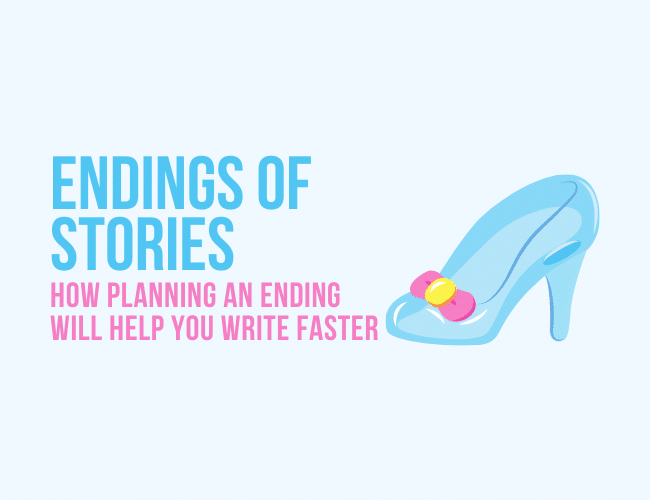
How to End a Story: 3 Questions That Will Help You Find the Perfect Ending

How to End a Story: 3 Questions That Will Help You Find the Perfect Ending

The hardest part of writing a story might just be figuring out how to end a story. But what makes a good ending? How about a great ending? Is there a difference? 

Endings are intimidating. They’re heavy-laden with all the narrative weight of your story.

And they’re so much harder to write than we imagine when they play out in our heads.

This is why so many trilogies end with a whimper, rather than a bang (Star Wars, Alien): Endings are hard.

But how do you write that rare, coveted third act that nails every beat and delivers on the audience’s hopes and dreams? How do you conclude your story, or trilogy, or series with power and poise?

Let’s dive deep into how to write a winning ending by exploring three essential questions that will keep you on track as you wrap up your next story.

What is Suspense? Why and How It Makes Better Books

What is Suspense? Why and How It Makes Better Books

Year after year, mysteries, thrillers, and suspense stories dominate at the box office, bookstores, and streaming services. We love suspense. We demand it in our entertainment. But what (exactly) is suspense in a story? And why does suspense matter so much in a good...

How to Write Better Stories by Knowing Your Story Grid Genre

How to Write Better Stories by Knowing Your Story Grid Genre

Why do some books “work,” while others don’t? Why do readers ravenously consume one book, while they put down another and forget about it entirely?

If you want to write books that readers love, you’d be wise to find answers to these questions and apply those answers to your work. Thankfully, there’s a resource available to you that provides an insider’s look at what readers want: The Story Grid!

There’s No Such Thing as Original Stories: You’re Not Original and Why That’s Good

There’s No Such Thing as Original Stories: You’re Not Original and Why That’s Good

Have you ever heard that there are no original stories? As a writer, did this turn your stomach or make you angry?

Although the idea that there are no original stories sounds upsetting, especially for writers, the truth is that every story follows the rule (most likely) of “same, but different.”

That’s a good thing!

If stories were completely original, it would be hard to know if there was a readership interested in them. We want stories that are unique, but that also follow the same conventions and tropes of certain types of stories that we’ve read or seen before.

Doing this means that your story will impact your ideal readers, and here’s why.

How to Apply Writing Feedback (And How to Know What You Can Ignore)

How to Apply Writing Feedback (And How to Know What You Can Ignore)

Do you crave solid feedback on your writing but rarely get it? Our maybe you’ve received feedback but you’re having trouble what to embrace and reject, or how to apply writing feedback in general.

Learning how to apply writing feedback is tricky, but knowing how and when to accept and reject suggestions can drastically change your story’s ability to touch readers. It will also teach you how to give better feedback to others, which is crucial for building your writing community.

3 Writing Challenges That Will Make You a Better Writer

3 Writing Challenges That Will Make You a Better Writer

Are you looking for a writing challenge that really tests your writing skills? Something that pushes your writing process beyond national novel writing month (although trying out NaNoWriMo is a good challenge to face)?

As a writer, you’ve probably heard this question: “What’s your genre?” Or maybe you’ve been asked, “What is your book about?”

As writers, we tend to find a creative “happy place” and stay inside three boxes: medium, form, and genre. This allows us to find a consistent voice and target our work towards ideal readers.

But staying inside these boxes without any deviation can have major drawbacks that threaten the quality of your writing, and the joy of writing itself. 

In order to stay sharp, writers need challenges to keep their creative juices alive and well. 

And whether or not these challenges are daily writing challenges or something you find on social media without even looking for them, it’s important that, as a writing habit, we tackle them head on every once in a while. 

We only become better writers when we step out of our comfort zones. 

These three writing challenges will test and strengthen your writing skills. 

The Cliffhanger: How to Write a Story Your Readers Can’t Put Down

The Cliffhanger: How to Write a Story Your Readers Can’t Put Down

When you put your writing out there for others to read, what do you hope will happen? If you’re like most writers, you want readers to get pulled into your story and keep turning pages to the end. You want your story to be un-put-downable.

It’s no secret that the time-tested method of using cliffhangers at the end of your chapters or scenes is a sure-fire way to make that happen. But what a lot of writers don’t realize is that the cliffhanger ending is only half the equation.

The cliffhanger is the hook that makes the reader turn the page, but if you don’t have a solid line supporting them across the gap and a sinker that pulls them deep into the next scene or chapter, your fish is likely to wriggle off and swim away.

3 Fundamental Lessons Fanfiction Taught Me and 5 Fanfiction Prompts You Can Try

3 Fundamental Lessons Fanfiction Taught Me and 5 Fanfiction Prompts You Can Try

Do you like writing fanfiction, but struggle to get going? Do you like to use fanfiction prompts to practice writing? Or, do you question if writing fanfiction will even benefit your writing? 

Fanfiction can actually make your writing much stronger. And understanding what fanfiction is and using fanfiction prompts to give it a try (before you bash it) might be well worth your time.

Say Yes to Practice

Join over 450,000 readers who are saying YES to practice. You’ll also get a free copy of our eBook 14 Prompts:

Popular Resources

Books By Our Writers

RSS Error: A feed could not be found at `https://books.thewritepractice.com/category/featured/feed`. This does not appear to be a valid RSS or Atom feed.