It bears repeating that the English language is full of odd sayings. Never fear, though—we’re here to break them down.
Today, we’re taking on a hairy turn of phrase: “it bears repeating.” Or is it “it bares repeating”?

At The Write Practice, we publish a new article each day designed to help writers tackle one part of their writing journey, from generating ideas to grammar to writing and publishing your first book. Each article has a short practice exercise at the end to help you immediately put your learning to use.
Check out the latest articles below or find ones that match your interest in the sidebar.
And make sure to subscribe to get a weekly digest of our latest posts, along with our free guide, 10 Steps to Become a Writer.
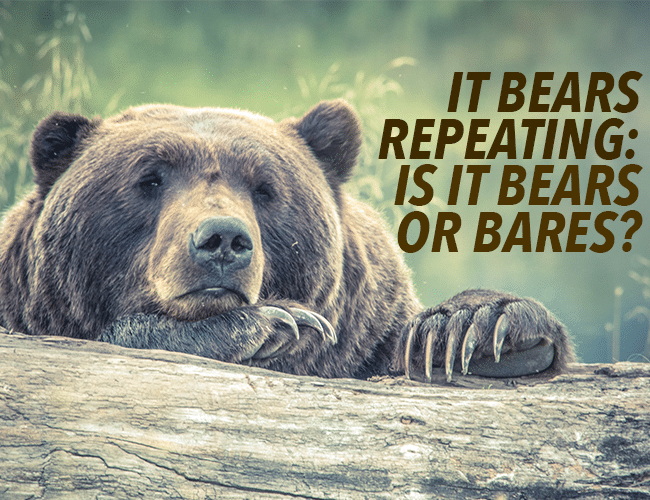
It bears repeating that the English language is full of odd sayings. Never fear, though—we’re here to break them down.
Today, we’re taking on a hairy turn of phrase: “it bears repeating.” Or is it “it bares repeating”?
Have you ever felt a rush of writing anxiety when trying to finish your story?
Whether you view this as resistance or low self-esteem, writing anxiety can prevent you from finishing that beautiful, unique story that only you can tell. Here are four common problems that feed writing anxiety and tips on how to overcome them.
In the writing world, flash fiction is like an appetizer. These “short short” stories may be small and end quickly, but they can be so satisfying. The trick isn’t to treat them like a short version of a longer work, but rather as an art form all its own. That’s not to say it isn’t challenging to write, because it is, but there are several strategies you can use to help you perfect your work.
November is here! It’s a perfect time to dust off your writing journal (the one you got for the holidays last year?) and start exploring some creative writing ideas before the end of the year. Today we have 30 November writing prompts to get you started. Let’s go!
For most of my creative writing life, I’ve tried to write novels. Novels are the pinnacle of fiction writing in the same way oil painting is the pinacle of art. I thought that if I were going to be a writer it meant I didn’t have a choice but to write novels.
However, recently, my thoughts have changed. In fact, for a few years I locked my novel away in my desk drawer to focus all my attention on short stories.
Here are four reasons why you should consider writing short stories instead of novels.

Have you ever wondered how the elements of story impact your book’s genre? Do some elements of story have greater importance in a book because of the book’s genre?
I can think of several times when I’ve gone to a restaurant and taking the time to slowly chew my food, so I can experience how each of my senses is impacted by the food: from taste to smell to sight.
The level of importance the elements of story have on genre isn’t so different. We all have certain tastes—factors that appeal to us in different ways on our taste buds—and it’s the same with our reading preferences. I came to understand this in a profound way when I worked for our local library system, which I’d like to share with you today.
Readers crave certain “flavors” and genre helps them define what they like and discover more of it.
How the five elements of story vary in level of importance because of the genre may impact your perspective—and in a good way, for writers trying to satisfy their target readers!
A pitch session is a five to ten minute period of uninterrupted time with an agent. Here’s how to make the most of that opportunity.

How do you write when you don’t have time to write? When your life is full and busy with job, school, family, and other obligations, it can be tough to squeeze in writing. But don’t give up—there are ways to keep writing even if you don’t have time to sit down with a pen and paper.
If you’re following along with our short story publication series, by now, you should have a publication in mind and have the answers to a couple basic questions. Maybe you brainstormed or did a full outline. Bonus points if you’ve got a draft! (But don’t worry if you don’t.)
Now pick up the pen and write the thing!
A lot of you have just finished participating in The Write Practice’s Short Story Publication Challenge. You’re pumped, inspired, enthused. You feel good about establishing a writing habit. Now what?
Now you submit it. Then you write another and submit that one too.
This post is the first in a four-part series that will walk you through the process of planning, writing, and submitting a short story. At the end of the series, you’ll have a short story ready for submittal!